Living in the mountains means living on slopes. And slopes mean you need walls — walls that hold back tons of earth, manage water pressure, and last for decades.
Terra Builders AVL builds retaining walls engineered for Asheville's specific challenges: heavy rainfall, clay soil, freeze-thaw cycles, and steep grades.
Types of Retaining Walls We Build
Natural Boulder Walls — Using locally sourced stone that blends with the mountain landscape. Perfect for naturalistic designs and moderate heights.
Segmental Block Walls — Engineered interlocking blocks for maximum structural integrity. Ideal for walls over 4 feet that need to handle serious loads.
Timber Walls — Pressure-treated timber for smaller retaining applications, garden terraces, and rustic aesthetics.
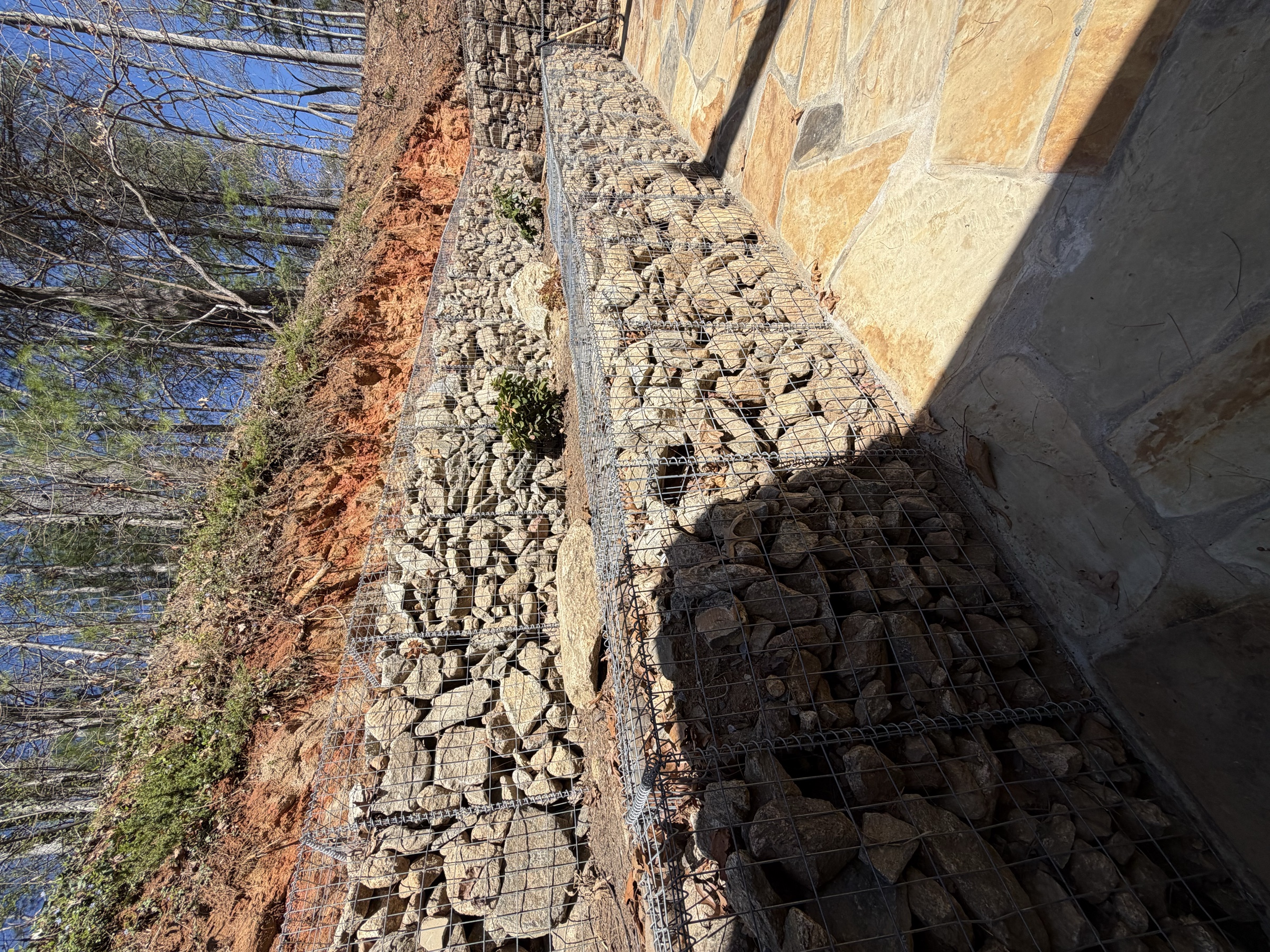
Gabion Walls — Wire baskets filled with stone. Excellent drainage, natural appearance, and strong performance on steep slopes.
When You Need a Retaining Wall
- Your yard is washing away after every rain
- You want to create a level area on a slope for a patio, garden, or play space
- Your existing wall is failing, leaning, or cracking
- You're building on a hillside and need to stabilize the cut
- Your driveway needs support on the downhill side
Engineering Matters
In Buncombe County, retaining walls over 4 feet require engineering plans. We work with local structural engineers to ensure:
- Proper drainage — Hydrostatic pressure is the #1 cause of wall failure. Every wall we build includes drainage behind and through the wall
- Adequate foundations — Footings sized for the wall height, soil conditions, and surcharge loads
- Reinforcement — Geogrid reinforcement for taller walls, tying into the hillside for maximum stability
- Setback — Proper batter (lean-back) for gravity walls to resist overturning
Common Asheville Retaining Wall Issues
The red clay soil in WNC holds water like a sponge. When it freezes, it expands. When it thaws, it pushes. Walls built without accounting for this fail within 5-10 years. We see it constantly — homeowners who paid for a cheap wall and are now paying twice to replace it.
We build it right the first time.